>>Class II Overbite
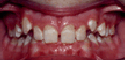
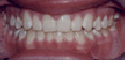
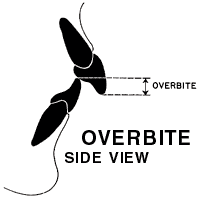
Overbite occurs when the upper front teeth protrude over the lower front teeth. Generally there is no contact between the upper and lower front teeth. Often you cannot see the lower incisors. Overbite is due to a disproportionate amount of eruption of front teeth, or over development of the bone that supports the teeth, and a front to back discrepancy in the growth of the upper or lower jaw (Class II Relationship). Overbite is also known as a deep bite. Overbite should be corrected because it can:
- cause improper functioning of your front teeth
- result in the lower front teeth biting into the gum tissue of the upper palate leading to tissue problems.
- unusual wear of the lower front teeth
- cause jaw or joint problems
- make your smile less attractive
>>How can an overbite be orthodontically corrected?
|
|
Overbite can be corrected through moving the front teeth up and/or bringing the back teeth together, which will "open" the bite so the teeth are properly aligned and the deep bite is eliminated.
|
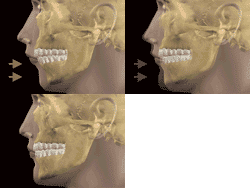
CLASSIFICATION OF THE FACE
| It is not sufficient to categorize orthodontic malocclusions on the basis of a classification of the teeth alone. The relationship with other craniofacial structures must also be taken into consideration. |
|
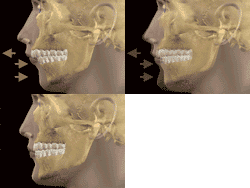
Maxillary Dental Protrusion - teeth
|
|
This malocclusion may require the removal of teeth.
|
|
Mandibular Retrognathism - jaws
|
|
The lower jaw bone has not grown as much as the upper jaw. This example of a Class II malocclusion demonstrates the need for early growth guidance.
|
Maxillary Dental Protrusion - teeth
& Mandibular Retrognathism - jaws
|
| These Class malocclusions are more difficult to treat due to the skeletal disharmony and may require orthognathic surgery in conjunction with orthodontic treatment. |
|